Digest – May

In the last month we’ve done a bunch more stuff.


Some things have been added to the Clinical Data section.


We’ll soon be doing even more stuff.

Digest – June

In this last month we’ve done a bunch more stuff. Again.


Some things have been added to the Clinical Data section.


Poll of the Month

There was some recent discussion on the blog for a recent Gemelo puzzle about the enumerations used in most barred puzzles for answers shown by Chambers as being hyphenated or comprising multiple words. Currently the answer DOUBLE BASS would be enumerated as (6,4) in a blocked puzzle, but (10, 2 words) in a barred puzzle; ONE-SIDED would be shown as (3-5) in a blocked puzzle but (8) in a barred puzzle. Over to you.

How should multi-word and hyphenated answers be enumerated in barred puzzles?

Continue reading

Clinical Data – Deletion Indicators

I had for some time felt that the list of deletion indicators was in need of reassessment, particularly in respect of passive departure indicators such as ‘rejected’, where it was not clear how they would be used in a clue – eg would “Burn piece of furniture I rejected” be valid for CHAR (CHAIR – I)? Prompted by a similar observation from a regular correspondent, I have significantly reworked the table, in particular by:

  • Adding prepositions where appropriate, so ‘rejected’ is now ‘rejected by’.
  • Adding a column showing a likely usage, so for ‘rejected’ this is ‘Y rejected by X’, in other words the substring Y is ‘rejected by’ the starting string X. Note that the entries in this column are typical examples, but many other constructions are possible, such as ‘X having rejected Y’.
  • Adding a search term ‘*T’ to a hidden searchable column. Typing *T in the Search box will filter the list to show only the transitive senses of the verbs indicating departure or expulsion (so ‘quitting’ but not ‘expelled by’); to find, for instance, all the transitive departure indicators, one can sort by indicator type and then use the *T filter.

The wordplay in “Burn piece of furniture I rejected” for CHAR contains what is often termed an ‘invisicomma’ between ‘furniture’ and ‘I’; the solver is being asked to infer a comma which is not there, because in order to be grammatically sound the wordplay needs to read ‘assertion, I rejected’ (or, alternatively, ‘assertion with I rejected’). The comma isn’t there, of course, because it would adversely affect the surface reading, but that is surely something that the setter should have dealt with, rather than presenting the solver with an unsound cryptic reading – in the example, the addition of the missing comma (“Burn piece of furniture, I rejected”) renders a previously natural reading nonsensical. The invisicomma is becoming more common in puzzles, but several editors will still not accept it, quite rightly in my opinion.

I would like to think that the new list is an improvement on the old one, but I would welcome your views. And please let me know if you spot any errors.

Notes for Azed 2,772

There are usually one or two points of interest in an Azed puzzle, and here we pick them out for comment. Please feel free to add your own questions or observations on any aspect of the puzzle (including clues not listed below) either by using the comment form at the bottom of the page or, if would prefer that your question/comment is not publicly visible, by email.

Azed 2,772 Plain

Difficulty rating: 2.5 out of 5 stars (2.5 / 5)

A new month, a new Azed. In terms of difficulty, this one struck me as being pretty close to the middle of the Azed range. There were some nice clues, along with a couple of rather strange ones, such as 23a, where the word ‘destroyed’ should surely have been replaced by something like ‘laid waste’.

Clue Writers’ Corner: The good news is that this month’s competition word has not appeared in that role previously – in fact, I can find no evidence that it has ever appeared in an Azed puzzle. It’s the sort of word that makes one wonder how much latitude will be allowed when it comes to the definition, and on this occasion Azed has given us a bit of guidance with his own ‘straight’ definition. He likes, where possible, to use a definition taken directly from Chambers, but in this instance the only one available would have given the answer away. He could have replaced the ‘offending’ noun with something broadly similar, but instead he opted for the very general term ‘space’. This strongly suggests that clues which feature definitions along similarly broad lines will be accepted; it may be that a definition which cleverly pinpoints the area of specialism will earn a brownie point or two, but I would advise competitors to focus on their clue as a whole rather than seeking out a precise definition at the expense of other aspects.

Across

1a Old weapon officer briefly positioned in tropical tree (7)
The two-letter abbreviation for a particular rank of officer (‘officer briefly’, think Uhura, Kijé and Pigeon) is placed inside the name of a tree belonging to the mahogany family. There are two spellings of the weapon which would fit with the checkers, but the tree makes it clear which is required.

11a Snake-lover’s struck when absorbed by subject, first off (7)
A three-letter word meaning ‘struck’ is contained (‘absorbed’) by a word for a subject or theme from which the first letter has been omitted (‘first off’). The apostrophe-s is part of the definition.

12a Old head when taken in by bounder is beguiled (4)
When the four-letter obsolete (‘old’) word for a head which constitutes the answer is contained (‘taken in’) by a three-letter word for a bounder of the despicable kind, the result is a word meaning ‘beguiled’ or ‘coaxed’. I would have liked the wording of the clue to make it a bit clearer that the definition is ‘old head’ rather than ‘beguiled’, eg “When this old head’s taken in by bounder it’s beguiled”.

20a What may infest heated buildings bitumen injected – does it delay rusting? (9)
The familiar three-letter name for a bituminous substance is ‘injected’ into the (3,3) name for a particular insect. There are several related tropical species which can thrive in temperate areas by invading heated buildings; in the UK, at least, the little chappie in the wordplay isn’t one of these, living quite happily in our lawn, in our flowerbeds, under our paving slabs, and taking particular delight in excavating great heaps of sand from under our block paving, not to mention biting and stinging yours truly. However…Chambers tells a different story, saying that the term applies ‘especially’ to a “tiny yellow-brown tropical [variety] which has spread through many countries and infests heated buildings, eg hospitals, restaurants, blocks of flats.” So the bit about the buildings is ok, though I doubt whether one of them, as suggested by the clue, could reasonably aspire to an ‘infestation’ (even if he managed to move a rubber tree plant).

24a Old wagon needing map to get round orient (6)
The answer ‘needs’ a five-letter word for a map to contain (‘get round’) a single-letter abbreviation for the direction equating to ‘orient’; this seems to me an unacceptable degree of indirection, since it certainly isn’t an abbreviation for ‘orient’ itself.

32a Painter coming to Thailand, outcast (5)
The second name by which the Spanish surrealist artist born ???????? Domingo Felipe Jacinto ???? i Domènech was universally known is followed by the IVR code for Thailand.

33a Such as the Colorado Rockies or NE Andes, rugged? (7)
An anagram (‘rugged’) of NE ANDES produces the plural of a word for a group with a specific number of members; when the Colorado Rockies baseball team takes the field for a game, it comprises that number of players. Whatever else you might think about this clue, there’s no doubting that it’s imaginative.

Down

1d Taps excessive for shallow lake, often drying up (5)
The letters that you would see on the tops of taps in English-speaking countries (the one on the right coming first) are followed by a three-letter abbreviation meaning ‘excessive’, which I still associate with the late-night ‘adult’ version of Tiswas. It ran from early 1982 until…slightly later in early 1982, quite long enough.

4d Flat cake pa disposed of in carriage (5)
The seven-letter name for a flat round cake of unleavened bread often encountered – stuffed or otherwise – in Indian restaurants is deprived of the consecutive letters PA (‘pa disposed of’).

14d Skin marking in tailless dog, e.g. Oscar? (9)
A four-letter spelling for the sort of ‘skin marking’ which is very popular these days is contained by the six-letter name for a particular breed of dog (the sort that produces crosswords) shorn of its last letter (‘tailless’).

19d Prince taking lead in customary hunting (7)
The two letters of the abbreviation for ‘Prince’ are placed either side of the first letter (‘taking lead’) of a five-letter word for ‘customary’.

21d Heraldic beast in Egypt and Turkish province (6)
The name of a four-letter mythical creature, a Royal Beast (no, not that one) also known as a centicore (and sharing its name with an American university) is contained by the IVR code for Egypt. Well, it’s what Chambers gives as the IVR code for Egypt, but, as a regular correspondent points out, last year that code was changed to EG. This raises an interesting point – abbreviations don’t change, so even if all territorial armies ceased to exist the abbreviation TA would still have meaning in a historical context, but a superseded code is simply invalid. Chambers can be excused regarding Egypt, but it also gives K for Cambodia (formerly Kampuchea) – this was replaced by KH in 2009. Since the current edition of Chambers is the primary reference for the puzzle, using these old codes in clues is certainly not unfair, but it isn’t entirely satisfactory either.

22d Skin disease the old face, temperature included (6)
A five-letter Spenserian (‘old’) spelling of a four-letter word meaning ‘face’ or ‘face up to’ has the usual abbreviation for temperature inserted (‘included’).

25d Wader in deep river, covering US acre at first (5)
The seven-letter name of one of the rivers of the Greek underworld (‘deep river’), as well as a river in the Epirus region of Greece, has the two-letter US abbreviation for ‘acre’ removed from its start (‘covering US acre at first’).

26d What makes Scot’s expression of disapproval for beloved (5)
I don’t know why Azed felt the need to include the first two words in this double definition clue, since they don’t appear to add anything to either the literal or the cryptic reading. The ‘expression of disapproval’ is a Scots form of a familiar three-letter interjection.

28d NZ aboriginals with a local bird (4)
The three-letter word for “a Maori gathering” (ie ‘NZ aboriginals’, perhaps a somewhat loose indication) is followed by the letter A (from the clue), the result being the name of a bird from New Zealand (ie ‘local bird’) which (unfortunately in terms of its continuing co-existence with modern man) had striking black and white tail feathers. It was hunted both for fashion and for collections, and its habitat was destroyed, leading to its extinction in the early 20th century.

(definitions are underlined)

Hosting Provider Change Complete

Updated 04/11/25 08:30

The ‘change of address cards’ for the site now appear to have reached all corners of the Internet, and the SSL/TLS certificate is in place.

If you have any problems accessing the site, or spot any issues with the content, please leave a comment below or email me.

I am confident that the new environment will allow us to develop the site further without the attendant risk of interruption to service that existed on the old platform. More information to come.

Notes for Gemelo 13

There are usually one or two points of interest in an Observer barred puzzle, and here we pick them out for comment. Please feel free to add your own questions or observations on any aspect of the puzzle (including clues not listed below) either by using the comment form at the bottom of the page or, if would prefer that your question/comment is not publicly visible, by email.

Gemelo 13 Plain

Solver difficulty rating

3.3 based on 50 votes (voting is now closed)

Please give your own G-rating for this Gemelo puzzle by clicking on the relevant star above, with one star representing a very straightforward solve by your own standards (Gentle) and five stars indicating a seriously tough one (Ghastly). Note that hovering over the ‘graph’ icon will show you the full breakdown of votes for the current puzzle.

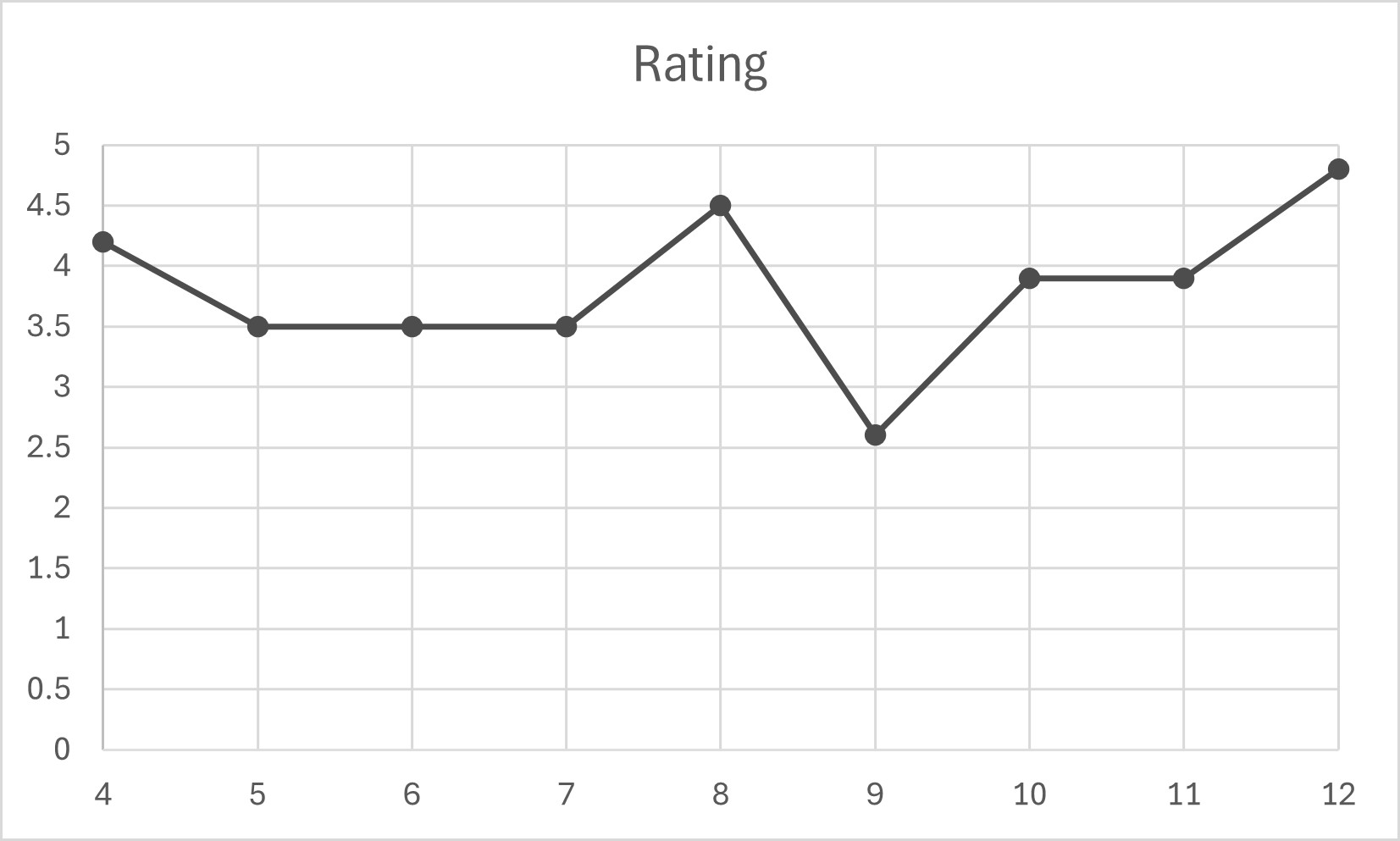
Last week’s ‘special’, the first Gemelo puzzle which has placed extra demands on the solver rather than just the setter, was rated as his toughest offering so far – your scores were all 4s and 5s, with the 5s comfortably in the majority, resulting in an average of 4.8. I too thought it was a tough puzzle, although it seemed like one of those which yielded gradually to prolonged attack, the wordplays being tricky but not fiendish, and most of the definitions being relatively direct. Your average ratings for puzzles 4 to 12 are graphically illustrated below:

Today we have a ‘plain’ to contend with, and it’s not without its challenges – I shall be interested to see what you make of it. There were no fewer than four &lits, which is an unusually high number. We’re starting to get used to a few of Gemelo’s little trademarks, including the ‘side’ in 28d (although I’m not sure that it’s appropriate in this instance). I marked 24 clues as being potentially worthy of comment, so if I’ve missed out any that you’d like me to say something about just let me know.

Setters’ Corner: This week I’m going to look at clue 33a, “Noble old pets not having time to tour state capital (8)”. A six-letter archaic word for ‘the sulks’ (ie ‘old pets’) is deprived of the usual abbreviation for ‘time’ and put around the three-letter name by which a South American state capital (and a regular visitor to crosswords) is commonly known. We all, I suspect, have our particular bêtes noires when it comes to cryptic elements of crosswords, and I probably have more than my fair share. One that I particularly dislike is ‘tour’ to indicate containment; I can’t accept that it ever has that sense in real life. I don’t dispute that ‘touring a lake’ implies a journey round the outside of the lake, but ‘walking the lake’ carries the same implication, and ‘walk’ is surely not a valid containment indicator. Perhaps more importantly, though, the act of touring involves being in a single place at any given time, which rules out being both sides of something simultaneously. That, while suitably cathartic, is not my point, which is that I doubt whether any other solvers will have batted an eyelid, simply saying to themselves, “Ah, ‘tour’ – containment indicator!”, which is (give or take a word) what I thought too. So why should a setter not use an indicator which will be perfectly well understood by their solvers, irrespective of its validity when placed under scrutiny? I think that this is entirely between the setter and their conscience – it is my choice never to use ‘touring’ to indicate containment, but if using ‘artist’ for RA made for a nice clue, I would include it, despite some misgivings about its accuracy, simply because it is such an established part of the language of cryptics. Fundamentally, if your audience will understand what you are saying and won’t be displeased with the way you say it, then there’s a strong argument for it being acceptable.

Across

9a Killer that’s annoying Batman villain (8)
A four-letter exclamation meaning “That’s annoying[!]” is followed by the name of a Batman villain who was not introduced until 1993. He derives his strength from a super-steroid called Venom, which would surely make him a dangerous opponent should he decide to participate in the Enhanced Games.

9a Pay poet to remove introduction (4)
The poet whose mononym loses its first letter (‘to remove introduction’) is the only Italian one that crossword setters and solvers need to know about.

14a Bit of blood that may be seen after shedding foul skin (3)
When a four-letter word meaning ‘foul’ is stripped from the outside of (ie ‘after shedding foul skin’) a seven-letter word meaning ‘that may be seen’, what is left is a word that might somewhat obliquely be defined as a ‘bit of blood’, being a person with a blood relationship to another.

16a Extremely slowly covering a few centimetres? (6)
The first of the ‘&lit’ clues, where the entire clue serves as both wordplay and definition. Here the first and last letters (‘extremely’) of ‘slowly’ contain (‘covering’) a word for a measure of length roughly equal to 5.5cm (or a term for a fastening often used to join pieces of wood). The name given to the measure, which is one sixteenth of a yard, is of uncertain origin, but it seems possible that one sixteenth of the distance from the end of the yard-stick may have been marked by the thing in question. On the subject of bêtes noires, the use of ‘extremely’ as a first/last letter selection indicator is another of mine, and one which I share with Azed.

26a Cross German off Harvard’s list of courses (6)
The single-letter abbreviation for ‘German’ is removed from (‘off’) the American (hence “Harvard’s”) word (with its American spelling) for a list of university courses (or a list of pretty much anything else).

31a I see starboard of old salt (6)
The letter I (from the clue) is followed by a four-letter word meaning ‘[to] see’ or ‘go out with’ placed to the right (‘starboard’) of the usual abbreviation for ‘old’.

Down

1d Native American hiding cash in Georgia under solid stone (12)
A three-letter word for a particular Native American people (think Brigham Young’s state) contains (‘hiding’) the four-letter name of the standard monetary unit of Georgia (ie ‘cash in Georgia’), the combination being preceded by an adjective meaning ‘solid’ or ‘total without deductions’.

2d Carrying off kind of music like Vivaldi’s Spring (6)
The kind of music that you might associate with Eminem or 50 Cent is followed by a (2,1) expression which indicates the key of Vivaldi’s Spring from (but not by) The Four Seasons. I know little of such things, and there seemed to be two possibilities (although one would properly have meant the definition having a qualifier to show its obsoleteness). A quick Google search confirmed that the key wasn’t G, and the definition was spot-on as it stands.

3d Ridges in finely-jointed masonry abandoned by House of Lords (4)
A six-letter word for a square hewn stone, or finely-jointed masonry made from such stones, loses (‘abandoned by’) the two-letter abbreviation for the House of Lords.

7d This will get you out in company without dress (5)
Last week it was a ‘number’, this week it will ‘get you out’ – it’s produced when an eight-letter word meaning ‘in company’ is stripped of a word meaning ‘[to] dress’, now almost always seen compounded with ‘up’ or ‘out’; the noun, meaning, clothing, invariably appears in the plural.

10d Try – when missing ‘hot’ in Mexican food – this? (7)
This &lit has an informal four-letter word for a try or attempt (only given by Chambers as part of a specific expression) having the usual abbreviation for ‘hot’ removed (“when missing ‘hot’”) and being inserted into a thin rolled pancake associated with Mexican cuisine.

12d Material used to cover Mark and John? (6)
The usual abbreviation for ‘mark’ is followed by the first name of the artist formerly known as Reg (‘John?’). I think I would have preferred ‘for covering’ rather than ‘to cover’, which doesn’t have a suitable intransitive sense.

17d Made out spring of water, wise when there’s hard water everywhere (6, 2 words)
I think there may be something in Gemelo’s contract that says he always has to produce a difficult clue for this phrase. Today it’s an approximate homophone (‘made out’) of a three-letter word for ‘spring of water’ (or a peeper) and a four-letter word for ‘wise’.

19d For The Globe – it’s plausible? (7)
This is a nice clue. A charade of a three-letter word meaning ‘for’ and a four-letter word for a globe produces a Shakespearean word, perhaps an alteration of a familiar eight-letter word, which makes its only first-team appearance in Othello: “When this aduise is free I giue, and honest, ??????? to thinking, and indeed the course To win the Moore againe.” It sounds to me more like an impressive new name for padel.

25d Primarily despicable plebeian from down under? (5)
The first letter (‘primarily’) of ‘despicable’ and a reversal (‘from down under’) of a word for a plebeian, or a coarse, ill-mannered person, combine to produce a word which is pretty neatly defined by the whole clue.

29d Offer price? Idle to give an example (4)
Nudge nudge, wink wink…the actor/comedian is indeed an example of a person who bears this name. The ‘offer’ in the definition is a whimsical indication of someone who (in the US vernacular) ‘offs’ people in the same way that an ‘icer’ might. That makes we think – could ‘resurrector’ be defined by ‘de-icer’?  Don’t be surprised to see that one appearing before too long.

(definitions are underlined)

Notes for Gemelo 12

There are usually one or two points of interest in an Observer barred puzzle, and here we pick them out for comment. Please feel free to add your own questions or observations on any aspect of the puzzle (including clues not listed below) either by using the comment form at the bottom of the page or, if would prefer that your question/comment is not publicly visible, by email.

Gemelo 12 ‘For a change’

Solver difficulty rating

4.8 based on 45 votes (voting is now closed)

Please give your own G-rating for this Gemelo puzzle by clicking on the relevant star above, with one star representing a very straightforward solve by your own standards (Gentle) and five stars indicating a seriously tough one (Ghastly). If you accidentally select the wrong star, you can change your vote by simply clicking on a different one. Note that hovering over the ‘graph’ icon will show you the full breakdown of votes for the current puzzle.

You reckoned that the difficulty of last week’s puzzle was very similar to that of its predecessor, the majority of the ratings being 4’s; no-one assessed it as being less than a 3. I fully agree, having rated it as a 4 myself, the same as G10.

Those of you who have felt starved of the sort of ‘special’ that places demands on the solver as well as the setter will have cried ‘Huzzah and hurrah’ when they looked at today’s puzzle. Azed used to give us ‘definition of anagram’ crosswords where the wordplay led to an anagram of the defined answer, but Gemelo has kindly provided us with a definition of the anagram to boot. That, however, is balanced out by some pretty tricky wordplays, such that in many instances you are likely to find yourself getting the answer from the ‘real’ definition plus checkers and then working back to parse the remainder of the clue. You should certainly allow yourself a ‘Huzzah and hurrah’ (as well as a good stiff drink) when you cross the finishing line. Be careful if you solve 25a before 3d (as I did) – the entry could be either of two variant spellings, but the correct one ends in a vowel.

I’m not sure that there is any special technique for a puzzle of this sort, other than starting with the shorter entries and examining the clues to identify what looks like a wordplay, such that you can then isolate the definitions. I initially got a foothold in the NE corner and worked from there.

I have provided notes on a selection of clues, followed by a breakdown of the components of each clue.  Just ask if you need further clarification on any of the clues that I haven’t covered.

Setters’ Corner: It is still a source of amazement to me how Azed was able to construct puzzles like this so quickly by hand, and without electronic assistance. These days, though, the task of grid filling has been made considerably easier by the availability of various computer applications, none better when it comes to ‘special’ fills like this than the free tool from Quinapalus, Qxw. This has some extraordinarily powerful features which mean that, for instance, filling a grid where the entries are all anagrams of other dictionary words suddenly becomes a pretty straightforward task. But it can do all manner of other clever stuff besides. If you are looking to set themed puzzles, then Qxw should undoubtedly form part of your armoury.

Incidentally, for anyone who isn’t aware of it (as I wasn’t until a kind correspondent pointed me in its direction) there is a very nice video on YouTube featuring Azed and Gemelo.

Across

1a I’m restricted by no longer devoting land to assessing sphinx (10)
The letters IM (from the clue) are contained (‘restricted’) by an archaic (‘no longer’) word for ‘devoting land to’ or ‘bestowing property upon’. The answer will strike a chord with anyone who regularly solves blocked crosswords in The Guardian.

10a Malayan fruit tree from S Asia to expose to light Indian millet (7)
A three-letter word meaning ‘to expose to light’ (particularly of the natural kind) is followed by one spelling of a word for Indian millet, the more usual spelling being durra.

17a Add new colour to hard exterior in French vineyard headquarters (12)
The two-letter French word for ‘in’ is followed by a three-letter word for a vineyard (or vintage) and a seven-letter word for a headquarters or a fixed stopping-place (in particular for trains).

20a Regret hosting casual evening around suite with a common parent (7)
A three-letter word meaning ‘[to] regret’ contains (‘hosting’) the reversal (‘around’) of an ‘informal’ four-letter word for an evening, such as might be seen in posters announcing ‘Party ????’ or ’70s Disco ????’.

21a Special envoy ignoring one who cleanses masses of blood (7)
The usual single-letter abbreviation for ‘special’ is followed by a seven-letter word for an envoy or a person doing urgent deliveries (or the font in which the clue appears above) deprived of (‘ignoring’) the Roman numeral representing ‘one’. The word ‘one’ is almost doing double duty, since the definition of the anagram requires a ‘one’ (or a ‘someone’) to be inferred at the beginning.

24a Union member in due course allowed at institute on request (12)
A two-letter word meaning (among many other things) ‘in due course’ is followed by a five-letter adjective meaning ‘allowed’, the letters AT (from the clue), the single-letter abbreviation of ‘institute’, and the letters ON (again from the clue).

29a One getting trained followers to go through content of steel shrines (6)
A three-letter word for ‘followers’ (or ‘chess pieces’) is contained by (‘to go through’) the word ‘steel’ without its first and last letters (ie ‘content of steel’). I don’t like ‘content’ as a ‘remove wrapper’ indicator – I think that ‘contents’ is much more accurate, and i don’t know why Gemelo didn’t use it here.

33a Bully, you might say, once destroyed much appreciated water (7)
A two-letter interjection meaning ‘much appreciated’ or ‘thanks’ is followed by the sort of water that may be passed by humans (I’m not thinking of an ornamental lake here). The whimsical definition of the anagram is something of an old chestnut.

Down

5d Craving top US taxman to replace answer from whom? (1-5)
A four-letter relative pronoun which can often be interchangeable with ‘whom’ (eg in ‘The person whom I saw doing the crossword’) has the three-letter abbreviation for the Internal Revenue Service (‘US taxman’) replacing the single-letter abbreviation for ‘answer’ within it.

13d Buddhist desires such relations to sing triumphant cries (6)
The wordplay is a charade of a word meaning ‘to sing’ as a grass or a snitch might and the plural form for a classical ‘interjection of invocation, or expressing joy or triumph or grief’.

15d Temporarily takes over banks after backing most of Bob Norton’s family? (9)
The one clue where the anagram and the entry share an etymology. A four-letter word for ‘banks’ (such as cannons might be in) follows (‘after’) a reversal (‘backing’) of all but the last letter (‘most of’) a name for which ‘Bob’ is a diminutive. The ‘Norton’ in the definition of the entry is Mary of that ilk.

16d Abandoning support for bands outside, covering good Eminem song (9)
A four-letter word for the sort of ‘outside’ that a lemon or a cheese might have contains (‘covering’) the usual abbreviation for good and the four-letter title of one of Eminem’s most famous songs, which extensively samples Dido’s Thank You and concerns his (former) ‘number one fan’.

22d Hour in 5 seconds? Numbers, numbers (6)
The two-letter abbreviation for ‘hour’ is contained by (‘in’) an ‘informal’ three-letter word for the entry at 5d (‘5’), the combination being followed by the usual abbreviation for ‘seconds’. Since the two definitions are the same (one being another old cryptic chestnut), it doesn’t matter which relates to the anagram and which to the entry.

(definitions of grid entries are underlined, while definitions of anagrams are shown in red italics)

Composition of clues

Example: in 1a, the wordplay (W) consists of the first eight words, the definition of the anagram (DA) is the ninth word, and the definition of the entry (DE) is the tenth word – so it is (W8,DA1,DE1).

Across

1: (W8,DA1,DE1); 10: (DE2,DA4,W6); 11 :(DE1,DA5,W4); 12: (DA5,DE1,W2); 14: (W3,DE3,DA2); 16: (W2,DE3,DA1); 17: (DE4,DA2,W4); 20: (W5,DA1,DE4); 21: (W4,DA2,DE3); 24: (DE2,W7,DA1); 25: (DA1,DE2,W2); 29: (DE3,W7,DA1); 31: (DA1,W5,DE2); 32: (DE1,DA6,W3); 33: (DA4,DE2,W3); 34: (DA2,W5,DE5).

Down

1: (W3,DA2,DE2); 2: (DA2,DE1,W7); 3: (DA2,W5,DE1); 4: (DA1,W4,DE1); 5: (DA1,DE1,W7); 6: (DE2,DA3,W2); 7: (DA2,DE1,W2); 8: (DA1,W7,DE1); 9: (DA1,W4,DE2); 13: (DE3,DA1,W4); 15: (DA3,W6,DE2); 16: (DE1,DA3,W5); 18: (DE1,DA2,W3); 19: (DE3,DA/W1,DA/W1); 22: (W4,DA/DE1,DA/DE1); 23: (DA4,W5,DE5); 26: (DA1,W2,DE4); 27: (DE2,DA/W1,DA/W1); 28: (DE1,DA1,W4); 30: (DE2,DA1,W1).

Notes for Gemelo 11

There are usually one or two points of interest in an Observer barred puzzle, and here we pick them out for comment. Please feel free to add your own questions or observations on any aspect of the puzzle (including clues not listed below) either by using the comment form at the bottom of the page or, if would prefer that your question/comment is not publicly visible, by email.

Gemelo 11 Plain

Solver difficulty rating

3.9 based on 46 votes (voting is now closed)

Please give your own G-rating for this Gemelo puzzle by clicking on the relevant star above, with one star representing a very straightforward solve by your own standards (Gentle) and five stars indicating a seriously tough one (Ghastly). If you accidentally select the wrong star, you can change your vote by simply clicking on a different one. Note that hovering over the ‘graph’ icon will show you the full breakdown of votes for the current puzzle.

After the ‘constrained’ G9, which received an average rating of 2.5, you felt (quite justifiably in my view!) that G10 was considerably trickier, giving it a rating of 3.9, the most popular score being a ‘4’, which matched my assessment.

Congratulation to the two ‘regulars’ who were prize-winners for Gemelo 8. Also, if you haven’t already read it, this article by Caitlin O’Kane, the Observer Puzzles Editor, is worth a look.

Today’s puzzle, I have to say, didn’t do a lot for me. Some of the surface readings disappointed, seeming not to have received much ‘polishing’, and one or two clues perhaps bordered on being a little bit too clever. But I’ll be interested to hear what you made of it.

 Setters’ Corner: This week I’m going to look at clue 22d, “Ignition provided that spins round (6)”.  A two-letter conjunction meaning ‘provided that’ is reversed (‘spins’) and followed by a noun answering to ’round’. However, the clue features a construction which I suspect would not trouble most crossword editors but which I would always avoid – a charade of an element containing a main verb in the present indicative and one or more additional elements. ‘Provided that spins’ is fine for a reversal of the ‘provided that’ word, but it’s a statement rather than a noun expression, so adding something on the end shouldn’t be allowed: ‘A contains B C’, for instance, can only mean ‘A around (B+C), not ‘(A around B) + C’. The answer for the conscientious setter is to ensure that all elements are noun expressions, eg ‘provided that spinning round’ / ‘A containing B C’ or ‘provided that that spins round’ / ‘A that contains B C’. Incidentally, one could argue that in the clue for 22d it is just the ‘provided’ which leads to the two-letter word (it has that sense in conversational English), with ‘that’ being a relative pronoun, such that the result is indeed a noun expression – this may or may not have been the setter’s intention.

Across

1a Measure sand grouse or guinea fowl, each without trouble (4)
One can’t deny that this is clever, containing as it does two wordplays that have been amalgamated. Another name for a sand grouse, when deprived of (‘without’) a verb meaning ‘[to] trouble’ provides the solution, as does another name for the guinea fowl without a noun meaning ‘trouble’.

9a Australian uses this to launch Beethoven’s unnumbered works, bungling German (9)
Easy to biff the wrong answer if you’ve got a few crossers but not the first one and you’re not overly familiar with the cataloguing of Beethoven’s works (I’m sure Schroeder wouldn’t have had any problems here). A three-letter abbreviation of the German phrase meaning ‘works without opus number’ is followed by an anagram (‘bungling’) of GERMAN.

10a Irish policeman retreating, covered in eggs, with violence on the way? (8, 2 words)
A five-letter Irish policeman is reversed (‘retreating’) inside  (‘covered in’) a word for eggs of the fishy kind. The definition of the (4,4) answer is mildly oblique.

14a There’s more to come in obligation to make digital advancement? (6)
A three-letter abbreviation used at the end of a written page to indicate that “there’s more to come” is contained by a word for an obligation, the result being a verb with a slightly more oblique definition than that in 10a.

20a Branch liable to wither, having lost core following power of the sun (6)
Hands up everyone who knew the five-letter word for ‘liable to wither’ which must lose its middle letter (‘core’) and be preceded by the normal spelling of the name of the Egyptian sun-god (‘power of the sun’). You will note that my hand remains fixed at my side.

21a Firmly establish missing lead is back (3)
One of those clues where the solver is almost certain to find themselves working back from the solution (an adverb meaning ‘[towards the] back’ in the context of a ship or aircraft) to the four-letter word meaning ‘[to] firmly establish’ which must shed its first letter (‘missing lead’), this turning out to be an H.

28a Tongue River cutting border (4)
The six-letter name of a river associated with Liverpool (and Gerry and the Pacemakers) is stripped of its first and last letters (‘cutting border’) to produce the name of a particular language (‘tongue’). Given that there are a lot of rivers in the world, and a lot of languages too, this clue strikes me as being rather unsatisfactory.

29a Unplanned movement to steal a coin of James VI, with corresponding punishment (8)
A three-letter ‘unplanned movement’, often indicated in clues by ‘twitch’, contains (‘to steal’) A (from the clue) and the name of ‘a Scottish coin of James VI, with a lion on the obverse, worth 74 shillings Scots’. I’m not sure that the definition is entirely accurate, but we know what the setter is getting at.

Down

1d Bonnet, say, or crown worn by Irish (6)
A four-letter word for the crown of the head containing (‘worn by’) the usual abbreviation for ‘Irish’ produces a term which could be applied to Stere Bonnet, a true one-off. Born in 1688 near Bridgetown, Barbados, he and his two sisters inherited a plantation following the early deaths of their parents. He was educated and raised to be a gentleman, marrying the daughter of a planter, and having three sons and a daughter. He became a major in the island’s militia and was made a Justice of the Peace in January 1716. Not long afterwards, Major Bonnet informed his friends and family that he was leaving Barbados. In March 1718, he prepared the legal papers that allowed his wife and two friends to conduct his affairs while he was away. Then he did what anyone in his position would have done – despite knowing next to nothing about seamanship, he bought a sloop, named it Revenge, armed it with ten guns, hired a 70-man crew, and became a buccaneer called Captain Edwards. It all started off quite well, but then he had the misfortune to run into Blackbeard (Edward Teach), who tricked him first into giving up command of the Revenge and then into seeking a royal pardon which meant that Blackbeard could make off with all their accumulated loot. Undaunted, he reinvented himself as Captain Thomas and went back to his freebooting ways, but unfortunately for him he was captured, and despite making one escape he was executed in December 1718, his filibustering career having lasted less that nine months.

4d Keep measuring livestock, no longer used at all (9, 2 words)
A four-letter ‘keep’ of the stronghold type, a two-letter preposition meaning, among many other things, ‘measuring’, and an obsolete (‘no longer used’) word for ‘cattle’ or ‘livestock’ combine to produce the (3,6) answer always seen in a negative construction, eg “He can’t score a goal at all”.

6d Monkeys from this country biting a Cockney’s backside (7)
The two-letter abbreviation for ‘this country’ if you live within GB and NI, containing (‘biting’) the letter A (from clue), is followed by the Cockney word for the backside. This is one of those rather convoluted bits of rhyming slang, the word being a contraction of the name of a Greek philosopher; this rhymes with ‘bottle’, which is short for ‘bottle and glass’. You can probably work out the concluding rhyme.

7d Short musical sequence with love in abundance (5, 2 words)
A five-letter ‘sequence in melody’ missing its last letter (‘short’) is followed by the usual representation of ‘love’, the result being a (1,2-2) expression which also includes an accent, quite impressive for such a small package.

13d About period involving comeback of conservative political viewpoint? (9)
An &lit (all-in-one) clue, where the whole thing stands an indication of the answer. The wordplay has that familiar two-letter bit of commercial jargon meaning ‘concerning’ or ‘about’ being followed by a three-letter word for a period (ice or stone being examples) containing (‘involving’) a reversal (‘comeback’) of a four-letter acronym which was on occasion mockingly applied to Margaret Thatcher. Addressing the Conservative Women’s Conference on 21 May 1980, she said, “We have to get our production and our earnings into balance. There’s no easy popularity in what we are proposing but it is fundamentally sound. Yet I believe people accept there’s no real alternative.” The phrase ‘there is no alternative’ became a political slogan much used in support of economic liberalism, and has been revived by other politicians in more recent times.

15d Trumpet call from Oban welcoming head of local navy into port (7)
A two-letter Scots word for ‘[to] call’ containing (‘welcoming’) the first letter of ‘local’ precedes the single-letter abbreviation for ‘navy’ inside (‘into’) the name of a South American port (the only one that crossword setters seem to care about – I wonder how that makes Valparaiso feel).

18d Water too long delayed through what turned up (7)
A word meaning ‘late’ or (as explicitly shown by Chambers) ‘too long delayed’ is contained by the two-letter interjection almost invariably indicated in cryptics by ‘what’, the whole lot being reversed (‘turned up’)

27d What one needs to bowl over, dismissing player with bats from Perth (4)
This is one of those nice ideas that didn’t quite work out.  A (3,6) phrase for an impressive quality (‘what one needs to bowl over’) loses (‘dismissing’) a five-letter word for a player (of the sort that treads the boards), the result being a Scots (‘in Perth’) word meaning ‘crazy’. The cricket-related surface reading isn’t convincing, but, worse than that, ‘bowl over’ is a transitive verb, so in the cryptic reading it needs to be something like ‘bowl people over’. On top of that, I’m not at all keen on ‘with’ being used to link the wordplay and definition in a clue.

(definitions are underlined)

Notes for Azed 2,771

There are usually one or two points of interest in an Azed puzzle, and here we pick them out for comment. Please feel free to add your own questions or observations on any aspect of the puzzle (including clues not listed below) either by using the comment form at the bottom of the page or, if would prefer that your question/comment is not publicly visible, by email.

Azed 2,771 Plain

Difficulty rating: 2.5 out of 5 stars (2.5 / 5)

Good morning, Mr Azed, we’ve been expecting you… An enjoyable puzzle from the master, of somewhere around average difficulty – by Azed’s standards, that is, not Gemelo’s! I thought there were several nice clues, including 6d and 9d, although some of the links between definition and wordplay did seem to go a little too far. Note that ‘Brannagh’ in 29d should read ‘Branagh’, and that the competition word is making a repeat appearance (see below).

Clue Writers’ Corner: Not for the first time, the word to be clued is one that Azed has selected previously. The Slip for competition 1,174 in November 1994 can be found on the &lit site – you may not wish to view it, at least until you have submitted your clue, but there are some interesting comments which should apply equally to the current comp:

“Several of you expressed disgruntlement or downright disbelief at Chambers’s decision to label it only as an adverb, pointing out that the OED gives it additionally as a substantive (i.e. a noun), an adjective and a verb. And although most of you laboured nobly to define it adverbially, I didn’t feel I could reasonably disqualify clues indicating one of the other parts of speech. (A pity, really. It’s good for you to have to wrestle occasionally with the problems of dealing with an adverb. A clear indication of a word’s grammatical class is an essential ingredient of a sound clue.) For newer competitors it is also worth pointing out that for polysemes [spot the lexicographer!] I don’t require you necessarily to use the definition I choose to print with the puzzle. Any bona fide meaning or part of speech is acceptable.”

I particularly remember this competition because the winning clue was extremely clever, but its soundness was open to question. I think it is fair to say, based on this and other examples, that the more innovative the clue, the more likely Azed is to give the benefit of any doubt soundness-wise to the author. This is worth bearing in mind if you come up with a very succinct clue for a long word, but don’t forget that if the clue is blatantly unsound there will be no doubt of which to get the benefit!

Across

1a One bit of European cash invested in squalid area – age required (8)
A single-letter word for ‘one’ and the three-letter ‘European currency unit’ (or an old French coin, take your pick) are contained by (‘invested in’) the term for a squalid area, often a run-down part of a city.

7a Scriptural academic opening mouth causes dispute (4)
The usual abbreviation for ‘Doctor of Divinity’ is inserted into (‘opening’) the Latin word for a mouth, used in sciences ranging from A to Z (ie anatomy and zoology).

11a What’ll promote plant growth wife’s sown in middle of rains (5)
The ‘wife’ here is not W but the two-letter abbreviation of the relevant Latin word; this is placed inside (‘sown in’) the central letters of ‘rains’.

13a Means of climbing within beans twined round pole for leguminous shrub (12, 2 words)
A ‘means of climbing’ that would be used by roofers or traditionally-equipped window cleaners is contained by (‘within’) an anagram (‘twined’) of BEANS holding (’round’) the single-letter representing a pole of the geographic (or magnetic) kind. The answer is (7,5), and can be found in Chambers under the entry for the second word.

18a Stunner, forward – one’s for the plucking (4)
When you see ‘stunner’ in an Azed puzzle, a pound to a penny it will translate into the two-letter abbreviation-turned-noun for a knockout. Here it is followed by a familiar word which these days has the sense of ‘forwards’ only in the phrase which appears in the definition of 8d.

32a Old caps lay in a heap in front of one (5)
A four-letter verb meaning ‘to lay (something) in a heap’ is followed by (‘in front of’) the Roman numeral representing ‘one’.

34a Working farmer dividing tax, as once, unmarked (8)
The ‘as once’ indicates the obsoleteness of both the four-letter husbandman or ‘working farmer’ (think Linnaeus or Jung) and the historical tax into which it is to be inserted (ie ‘dividing tax’).

Down

1d Old Yemenis mostly cast down from below (4)
A five-letter word meaning ‘[to] cast down’ is deprived of its last letter (‘mostly’) and reversed (‘from below’).

2d Examining cloth in maturity coating bone (7)
A three-letter word for ‘maturity’ contains (‘coating’) the name of a bone in the forearm (or foreleg for any any quadrupeds who happen to be solving the puzzle).

The answer is a variant spelling of an obsolete word for ‘official inspection and measurement of woollen cloth, and attestation of its value by the affixing of a leaden seal.’ The definition should therefore surely be qualified in some way; the ‘in maturity’ can’t fulfil that role because it is essential to the wordplay.

4d Most of decree taken up in textual emendation (4)
The structure of the wordplay here is identical to that of 1d, with a word for a decree replacing the one for ‘cast down’. The answer is a proposed – and apparently unnecessary – emendation to Shakespeare’s Sonnet 46:

But the defendant doth that plea deny,
And says in him their fair appearance lies.
To ???? this title is impanelled
A quest of thoughts, all tenants to the heart,

9d Tropical fish making whoopee at bottom of tub! (5)
This clue has Azed written all over it. A two-letter interjection expressing joy (‘whoopee[!]’) is placed underneath (‘at bottom of’) a dialect word for a tub or a box for carrying coal (Cole, if you’re an England rugby fan).

14d Member of the lower orders sips boozily in anticipation (9)
A five-letter informal contraction of an eleven-letter word for a member of the poorest class in a society is followed by an anagram (‘boozily’) of SIPS.

19d Bone fed to it cheers fighting dog (4)
In the Slip for 1,174, Azed wrote of one competitor’s clue that “The grammatical structure of clues must work in both their cryptic and their literal readings. Here I think the former was sacrificed to the latter.” I fear that the same could be said here, where one cannot reasonably infer a comma between ‘it’ and ‘cheers’, but without it the wordplay doesn’t work. A two-letter interjection answering to ‘cheers[!]’ has the two-letter Latin word for a bone (and a mouth – see 7a) ‘fed to it’, ie inserted within it.

21d Author experiences thoughts (7)
A charade of the usual generic three-letter word indicated in cryptics by ‘author’ or ‘writer’ and a verb meaning ‘experiences’ produces a word for ‘thoughts’; since this is classified by Chambers as ‘French’, ie it has not been fully assimilated into the English language, there really ought to be some qualification applied to the definition, eg ‘thoughts in Paris’.

24d In Shakespeare, mean old fellow switching parts (5)
The first two letters of a word for a fellow, often preceded by ‘poor’ or ‘lucky’, are moved after the last three (‘switching parts’). The ‘old’ seems to be required neither by the definition nor the wordplay, so it should be treated as a bonus.

29d Dirk, maybe? Or Branagh, in short on the up? (4)
‘Branagh, in short’ leads to the famous actor/director’s title and first initial; these must be reversed (‘on the up’) to produce the name of something that loosely resembles a dirk that’s gone though a shredder. For the benefit of younger solvers, the reference in the surface reading is to Dirk Bogarde, the actor born Derek Jules Gaspard Ulric Niven van den Bogaerde – I suspect (i) that the registrar in Perry Barr only had to record that name once in 1921, and (ii) that they were immensely grateful for that.

(definitions are underlined)

Notes for Gemelo 10

There are usually one or two points of interest in an Observer barred puzzle, and here we pick them out for comment. Please feel free to add your own questions or observations on any aspect of the puzzle (including clues not listed below) either by using the comment form at the bottom of the page or, if would prefer that your question/comment is not publicly visible, by email.

Gemelo 10 Plain

Solver difficulty rating

3.9 based on 42 votes (voting is now closed)

Please give your own G-rating for this Gemelo puzzle by clicking on the relevant star above, with one star representing a very straightforward solve by your own standards (Gentle) and five stars indicating a seriously tough one (Ghastly). If you accidentally select the wrong star, you can change your vote by simply clicking on a different one. Note that hovering over the ‘graph’ icon will show you the full breakdown of votes for the current puzzle.

The overwhelming view was that last week’s ‘all words the same length’ puzzle was far less challenging than the previous week’s ‘plain’, its rating of 2.6 being way down on G8’s record high of  4.5. The great majority of scores were 2’s and 3’s, with the 2’s predominating. I think that the gimmick may have contributed to its accessibility, but whatever the reason it was probably the most straightforward of Gemelo’s puzzles thus far.

Those who were thinking that this might be the ‘new normal’ may have had to think again. I’ll be interested to hear what you made of this puzzle, but there may be some solvers who would like Gemelo to be  ‘constrained’ more often. I did think that in some instances here the setter sacrificed accuracy on the altar of surface readings. I marked a lot of clues as being potentially worthy of comment, but I have limited myself to the usual 16 – if there are any others that you would like me to cover, just let me know.

Setters’ Corner: This week I’m going to look at clue 32a, “Removes platforms from headland, shielding last bit of Alcatraz? (6)”. The wordplay here has that handy three letter word for a headland or an Ethiopian prince containing (‘shielding’) the name of the last letter in (‘last bit of’) ‘Alcatraz’, but it isn’t the name given to the letter in the British version of English, rather the American form (as in ‘ZZ Top’ or ‘Liza with a Z’); this is suggested by the choice of ‘Alcatraz’ to deliver the letter, and the question mark which follows. This is fine as far as it goes; however, it does raise a general issue, on which my views have changed in recent years: can the name of a letter, rather than just the letter itself, legitimately be indicated in this way? ‘Start of campaign’ is absolutely fine for C, but is it valid for SEE? At one time, I would have said “yes”, but now I don’t think so – the ‘start’ of ‘campaign’ is what appears at the beginning of the printed word, ie C. If the solver is expected to translate this into the name of the letter, they need to be given a steer in that direction, using words like ‘letter’ or ‘character’, so  ‘character starting campaign’ would be fine for SEE.

Across

5a Obama, unusually without date, reads (7)
An anagram (‘unusually’) of OBAMA is followed by the two-letter abbreviation of a Latin phrase having the sense of ‘without a date’. The crafty definition refers to read2 in Chambers.

10a Brief note by side of gospel? (6)
An &lit, where the (4-2) brand name for a particular type of note (traditionally square and yellow) deprived of its last letter (‘brief’) precedes the final letter (‘side’) of ‘gospel’. The whole clue serves as a pretty good definition – one could even argue that the question mark is unnecessary.

13a Ultimately like Henry to come without first transforming need (8, 3 words)
The fat guy with the wives was the last English monarch who took the name Henry, so we must establish the ordinal attached to the next king (or queen, I suppose) with that name (ie ‘like Henry to come’), remove the first letter (‘without first’), and follow it with an anagram (‘transforming’) of NEED.

18a Piously goes without this gun for once (3)
I can see that I’m going to have to come to terms with Gemelo using the preposition ‘without’ to indicate containment, but I’m never going to accept it.  Here, when you put the string PIOUSLY around (‘without’) the answer (‘this gun’) you get a word meaning ‘once’ (ie ‘for once’). When it comes to the definition, ‘gun’ is a verb – I can’t give the Chambers definition here because it contains the answer, but it involves putting your foot down.

20a Greek poet unloading crates after second round (6)
There is undoubtedly something of Azed about this clue, where an eleven-letter Greek poet with the consecutive letters CRATES removed from his name (‘unloading crates’) goes after the usual abbreviation for ‘second’. I didn’t know the poet, but although his Wikipedia entry is pretty brief, he does get a mention in Chambers under the headword for the metre which he invented and which (I understand) frequently occurs in the choruses of Greek tragedies and in Horace.

30a Polish nobleman knocked back in very good blast (8)
Here we have a reversal (‘knocked back’) of a charade consisting of a two-letter word for ‘in’ (though you might have to think hard to come up with a sentence where they are interchangeable), a two-letter word meaning (according to Chambers, at least) ‘very good’, and an interjection along the lines of ‘blast!’ that you might associate with Snoopy.

34a Source of Thatcher’s limited amount of concentration (5)
The (2,4) name of a plant of the Cordyline genus, ‘whose sword-shaped leaves are used for thatching’, is shorn of its last letter (‘limited’) to produce a term for the strength of a solution (derived from the name of the process used to establish it)  or the concentration of an antibody, though surely not ‘amount of concentration’ (what even is that?). Suffice to say that there is very little about this clue that I like.

Down

2d Study old introduction to this book on style of living in Rugby? (12, 2 words)
This four-element charade starts with a three-letter word which has setters spoilt for choice – Gemelo has selected the archaic verb meaning ‘to study carefully’ (‘study old’). Then come the first letter of (‘introduction to’) ‘this’, the four-letter name by which a book of the Bible is usually known, and a four-letter string which has many familiar meanings (harbour, wine etc) but some unfamiliar ones as well, such as ‘style of living’. The answer is (7,5), the definition is by example, and the word ‘Rugby’ has been deceptively capitalized. I know the sequence of the first few books in the New Testament from a piece of ancient doggerel that involves wanting to establish where the Romans have gone, although I believe there’s another version where the Romans ‘carry on’ – and there may be others!

5d Trimmed whalebone on side of boat (4)
The six-letter word for whalebone is stripped of its first and last letters (‘trimmed’) to produce the answer; the definition seems rather vague.

6d Vulgar, boring songs perhaps lacking heart (8)
The combination of two five-letter words for ‘boring’ and ‘songs’ (or ‘commonplace instrumental performance’) loses the two letters in the middle (‘lacking heart’), the result being a word which was coined in 1845 by the politician George Smythe, MP for Canterbury. In an article for the Oxford and Cambridge Review about the late Earl Grey, he wrote “After 1812, and when the worse portion of the Tories got enthroned in the supremacy, when the ???????? principle (we must coin a word from the most expressive of languages to express all its intense vulgarity) began to obtain.” I can’t help feeling that the English language would have got on fine without it.” Smythe’s political career was abruptly derailed in 1846 when he was caught in a summerhouse with the 21-year-old Lady Dorothy Walpole the daughter of Horatio Walpole, 3rd Earl of Orford. It probably didn’t help that he’d put in an expense claim for the summerhouse…

7d Rough and ready hair for Sikh, though getting in tangle (9)
The four-letter word for ‘the uncut hair and beard traditionally worn by Sikhs’ and a two-letter word which can mean ‘though’ (as in “He’s a good player, though a little slow”) are contained by (‘getting in’) a word for a tangle.

9d Confused lecturer with leaves of paper? (7, 2 words)
This is an anagram (‘confused’) of the usual abbreviation for ‘lecturer’ and LEAVES which can produce two rather similar results, one being (1,6) and the other (2,5)  – only the latter can be used adjectivally, however, and is thus the one which (roughly) answers the definition ‘of paper?’.

12d Technically spread support when heading for green rule (4)
A three-letter (‘support [used] when heading for the green’) and the usual abbreviation for ‘rule’ combine to produce a word meaning ‘to spread’ which is shown by Chambers as ‘technical or dialect’, hence the qualifier in the definition.

17d Close friend hugging male water carrier (8)
A six-letter modern slang term for one’s closest friend contains (‘hugging’) a two-letter word for a male.

19d Spirit almost keeps entertainers in Asia (7)
The sort of spirit associated with zeits and polters sheds its last letter (‘almost’) and is followed by a three-letter word meaning ‘keeps’.

25d Guts of Scottish fish and one from New Zealand (4)
The six-letter Scottish fish which appears without its first and last letters (ie ‘guts of’) is often associated with Arbroath; the ‘one’ in the definition refers back to the ‘fish’ in the wordplay.

(definitions are underlined)

You may also like...

Add Comment

All fields must be completed. Your email address will not be published.